Insider tips for corporate flower subscriptions in Old Malden
Posted on 04/11/2026
Corporate flowers do more than "brighten the desk" and call it a day. In Old Malden, where offices, receptions, clinics, studios, managed workspaces, and client-facing counters all have different rhythms, the right subscription can quietly change the feel of a space. It can make a Monday entrance a little softer, a meeting room a little calmer, and a reception area a lot more welcoming. That sounds simple, but the details matter. A lot.
If you are comparing options for corporate flower subscriptions in Old Malden, the best results usually come from a smart mix of consistency, flexibility, and local awareness. You want arrangements that suit the room, last well, and arrive when your team is actually around to receive them. You also want a supplier who understands that business flowers are not the same as home flowers. They need to look polished on day one, still look decent by Friday, and not create extra admin for the person who has enough to do already.
This guide walks through the practical side of getting it right: what a corporate subscription is, how it works, how to choose the right plan, where people often go wrong, and which small details make the biggest difference. If you have ever wondered why one office display looks thoughtful while another just looks expensive, the answer is usually in the setup. Not the flowers alone. The setup.
Expert summary: The best corporate flower subscription is the one that fits your space, your schedule, and your brand mood without creating extra work. In practice, that means clear delivery instructions, a sensible budget, and flowers chosen for longevity as much as appearance.
Table of Contents
- Why corporate flower subscriptions in Old Malden matter
- How the subscription process works
- Key benefits and practical advantages
- Who this is for and when it makes sense
- Step-by-step guidance
- Expert tips for better results
- Common mistakes to avoid
- Tools, resources and recommendations
- Law, compliance, standards, or best practice
- Options, methods, or comparison table
- Case study or real-world example
- Practical checklist
- Conclusion
- Frequently asked questions
Why corporate flower subscriptions in Old Malden matter
Old Malden has a very "real working area" feel about it. Not flashy, not trying too hard, but busy enough that presentation still counts. If your business welcomes visitors, sees regular deliveries, hosts internal meetings, or simply wants staff to walk into a more pleasant environment, flowers become part of the atmosphere. They are not just decoration. They are a signal.
That signal can be surprisingly useful. A tidy reception with fresh arrangements suggests order. A well-chosen desk arrangement tells clients you pay attention. A recurring floral refresh in a waiting area can soften hard lines, reduce that slightly clinical feeling, and make the room feel lived-in rather than just functional. People notice these things, even if they do not say so out loud.
There is also a local practicality to it. In a place like Old Malden, many businesses do not have the time for one-off flower shopping every week. Someone has to remember the replacement. Someone has to carry it. Someone has to water it. Then someone has to clear the tired stems out. A subscription takes that off the list. It turns flowers into a managed service rather than one more job you keep meaning to do.
And let's face it, offices can go a bit grey. One fresh arrangement near a desk cluster or counter changes the feel more than you might expect. Not magically. Just enough. Enough to matter.
How corporate flower subscriptions in Old Malden works
A corporate flower subscription is a recurring delivery arrangement, usually weekly, fortnightly, or monthly, designed for business spaces rather than private homes. Instead of placing a new order every time, you agree a schedule and a style preference, and the florist delivers fresh flowers on that cycle.
Most subscriptions are built around a few core decisions:
- Delivery frequency: weekly is common for busy client-facing spaces; fortnightly or monthly can work for lower-traffic offices.
- Budget range: this sets the scale of the design, vessel choice, and stem count.
- Style direction: modern, classic, soft neutrals, brand colours, seasonal mixes, or something more luxurious.
- Placement: reception desk, boardroom, waiting area, break-out space, showroom, or executive office.
- Maintenance expectations: some businesses want vase arrangements they can top up; others want low-effort designs in containers.
In practice, the first delivery is often the most important. That is where the florist learns your room lighting, the size of the surface, and whether the arrangement needs to look impressive from six metres away or three. A small reception table and a long boardroom console are two different beasts entirely.
Some subscriptions include seasonal rotation, which is worth considering. The flowers change with the time of year, so you avoid that "same bunch, same week" feeling. A winter arrangement in Old Malden can look elegant and restrained; summer can go brighter and more generous. If your business changes tone through the year, the flowers can follow suit without you having to think about it every month.
It is also common for corporate subscriptions to be adjusted as you go. In other words, you are not locked into a rigid formula. Good planning matters, yes, but so does flexibility. A busy month, an event, a holiday period, or a sudden office move can all affect what makes sense.
Key benefits and practical advantages
People usually start with the visual appeal, which is fair enough. Fresh flowers make a space look cared for. But the practical benefits are what keep businesses subscribed.
- Consistency without extra admin: you do not need to remember to reorder every week.
- Better first impressions: clients and visitors often read the room before they read the brochure.
- Staff morale: small environmental touches matter more than people admit.
- Seasonal freshness: the arrangement does not feel stale or repetitive.
- Brand reinforcement: colours and styles can reflect your tone of voice.
- Time saving: no last-minute dashes to buy something that will wilt by Thursday.
There is another benefit that gets overlooked: decision fatigue reduction. Once the subscription is set, the routine is handled. For office managers, practice managers, front-of-house teams, and PAs, that can be a small but real relief. One less thing to chase. One less thing to worry about on a busy morning.
Flowers can also help smaller spaces feel deliberate rather than improvised. A compact arrangement on a counter can make a reception desk look finished. A low vase in a meeting room can quietly improve the ambience without getting in the way of laptops, notebooks, or the all-important tea tray.
Who this is for and when it makes sense
Corporate flower subscriptions are not only for large offices. In Old Malden, they make sense for a broad range of businesses and organisations:
- reception areas that greet visitors daily
- medical or wellness practices that want a calmer feel
- estate agencies and professional service firms
- co-working spaces and serviced offices
- restaurants, salons, studios, and boutique shops
- hotels, venues, and event spaces
- independent businesses that host regular meetings or consultations
They also make sense when you notice that your current approach is patchy. Maybe someone buys flowers only when they remember. Maybe the vase is too tall. Maybe the colours clash with the room. Or maybe the arrangements are lovely for a day and then become a little sad-looking by the end of the week. Been there? Plenty of offices have.
A subscription is especially useful if flowers play a role in your customer experience. If clients wait in the same chair for ten minutes every visit, that space should feel intentional. If staff spend long hours in one room, the environment matters more than people outside the business realise. Small improvements, repeated regularly, do add up.
It may not be the right fit if your space changes constantly, your opening hours are unpredictable, or you do not have anyone available to receive and place deliveries. That is not a deal-breaker, just a sign you may need a more flexible arrangement.
Step-by-step guidance
If you want a subscription that actually works, not just one that looks good on paper, go through it in order. Do not skip the boring parts. They are usually the bits that save the most hassle later.
1. Define the purpose
Start by deciding what the flowers are meant to do. Are they there to impress clients, lift a waiting room, support branding, or brighten staff areas? A reception display needs a different approach from a boardroom feature or a small desk arrangement.
2. Measure the space properly
Measure the surface, but also think about sightlines. A floral arrangement should not block signage, conversations, computer screens, or paperwork. Sometimes a lower design works better than a grand one. Quietly elegant often wins.
3. Choose the delivery rhythm
Weekly is the safest choice for high-traffic or client-facing spaces. Fortnightly may suit smaller offices or areas with less daylight. Monthly can work if the display is more decorative than functional. Be honest about how much upkeep your team can handle.
4. Set a budget range
It helps to think in terms of purpose rather than just price. A budget for a small desk arrangement will differ from a subscription for a full reception and meeting suite. The right budget is the one that gives you the look you want without creating waste.
5. Decide on style and colour direction
Some businesses prefer whites and greens for a calm, professional feel. Others want richer tones, seasonal colour, or flowers that echo their branding. If your walls, flooring, or furniture are already bold, something softer may work better. If the room is plain, flowers can carry more visual weight.
6. Confirm practical details
Ask how deliveries are handled, where the arrangement will be placed, and who signs for it. If your office closes at lunchtime or your building has access rules, say so early. This is the part that saves all those annoying phone calls later.
7. Review after the first few deliveries
After two or three cycles, check what is working. Does the arrangement last long enough? Is the scale right? Is the vase practical? Do certain colours suit the room better than others? Good subscriptions improve through feedback. They should.
8. Refine seasonally
What works in one season may not work in another. Lighter designs often suit brighter months, while richer textures can feel better in autumn and winter. Adjusting with the season keeps the space feeling current rather than repetitive.
Expert tips for better results
Here is where the insider bit really matters. The difference between "nice flowers" and "why does this room suddenly feel better?" tends to come from a handful of details.
Pick stems that hold up well indoors. For corporate use, longevity matters more than being trendy. Some flowers age beautifully; others give up after a day or two. A florist with local experience will usually know which options behave best in offices, especially where heating, air movement, or limited light can shorten vase life.
Match the arrangement to the room temperature. A warm reception area near direct sunlight needs a tougher design than a cool internal meeting room. This sounds obvious, but it gets missed more often than you'd think.
Keep containers practical. Tall, top-heavy vases can be elegant, but they are not ideal on narrow counters or anywhere that gets bumped by visitors. Low or stable containers are often a better business choice.
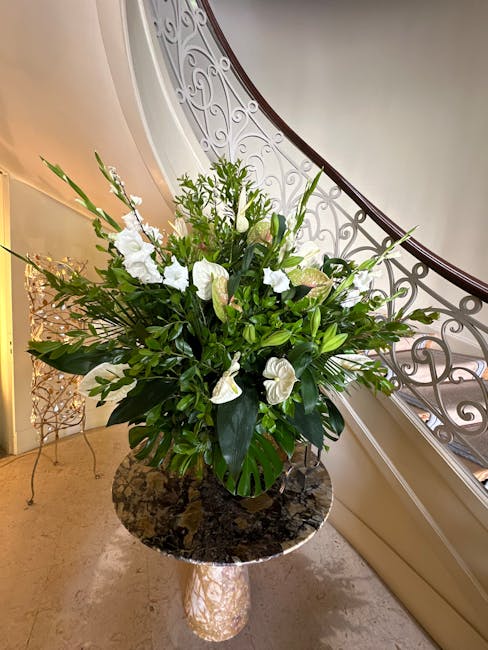
Think about scent carefully. Strong fragrance can be lovely in the right place and a bit much in the wrong one. In a shared office or client-facing environment, subtle is usually safer. A quiet scent. Not a perfume counter.
Use brand colour strategically. You do not need a perfect match every time. A soft echo of your brand palette is often more tasteful than forcing the exact same shade into every arrangement. That way the flowers feel designed, not printed.
Ask for a "presentation-first" design. Corporate flowers should look good from the angle people actually see them from. A florist arranging for a round table will think differently from one designing for a reception counter. That practical awareness matters.
Plan around your busiest days. If Monday mornings are chaotic, a Friday delivery may be easier. If you host meetings midweek, arrange delivery the day before. Timing is one of those small things that saves a lot of stress.
Keep a simple notes log. It does not need to be fancy. Just jot down what people liked, what lasted well, and which designs felt too large or too delicate. Over time, that becomes really useful. A tiny office ritual, basically.
Common mistakes to avoid
Most corporate flower problems are not dramatic. They are just avoidable. And they usually come from rushing the setup.
- Choosing by price alone: cheapest is not always best if the arrangement looks sparse or fades quickly.
- Ignoring size: too large can clutter; too small can look apologetic.
- Forgetting access instructions: deliveries fail when no one can receive them.
- Picking overly fragrant flowers for shared spaces: not everyone wants a strong scent all day.
- Using the same design forever: repetition makes even good flowers feel tired.
- Not checking vase stability: one wobble on a reception desk can become a messy lesson.
Another common issue is assuming the first arrangement must be perfect. Truth be told, a good corporate subscription often improves after the first cycle. The supplier learns the space, and you learn what matters most. That is normal. If the first version is close, you are in a good place.
One more thing: do not hide delivery constraints. If your building has awkward access, say it clearly. If there is a concierge, mention it. If staff changes mean reception is unmanned before 9 a.m., that matters too. Small details, big difference.
Tools, resources and recommendations
You do not need a complicated system to manage a subscription well. A few practical tools are enough.
- Space notes: keep a record of each area where flowers are placed and the ideal dimensions.
- Delivery instructions sheet: include access notes, contact name, and preferred times.
- Rotation calendar: useful if you want seasonal variety across the year.
- Feedback note: a short internal form for staff comments after a delivery.
- Budget tracker: helps you see whether the subscription is staying in line with expectations.
When you are comparing floristry options, it can also help to look at a florist's broader service pages so you understand their approach to reliability, care, and customer support. For example, a business might highlight its corporate account options, which can be a useful starting point if you are looking for repeat service rather than one-off orders.
If your team needs a broader overview of availability and local delivery patterns, you may also want to review the florist's delivery information and the main flower delivery in Old Malden KT3 page, especially if your business has strict reception hours or access procedures.
For businesses that want a simple place to begin, browsing the main Old Malden florist page can help you understand the style range available before you commit to a subscription. And if you need a more visible refresh, seasonal or special-event options such as luxury flowers or flowers in a vase can give you a sense of presentation quality.
If you are working to a tighter budget, it is worth checking the florist's affordable flowers range too. Not every corporate space needs a grand display. Sometimes a smaller, well-placed arrangement does the job nicely.
Law, compliance, standards, or best practice
Corporate flower subscriptions are not a heavily regulated service in the way some industries are, but there are still sensible standards and business practices to keep in mind. In the UK, that usually means a few straightforward things: clear payment terms, delivery agreement, reliable communication, and respect for premises access rules.
If flowers are being delivered into a shared building, the business receiving them should think about building policies, reception procedures, and any restrictions on leaving goods unattended. That is just good practice. It also helps avoid confusion if a delivery arrives early or the usual contact is away.
There are also general business considerations around privacy and contract terms. If you sign up for a recurring service, read the terms carefully so you understand cancellation periods, missed delivery handling, refunds, and substitutions. That may sound dry, but it saves frustration later. A five-minute read now can prevent a five-email exchange later. Which is a win, frankly.
On the supplier side, good practice usually includes responsible sourcing, clear product information, and transparent complaints handling. If sustainability matters to your business, ask how the florist approaches sourcing, waste, and packaging. You do not need a lecture. Just a clear answer.
If you manage a workplace, you may also want to consider accessibility and safety. Arrangements should not obstruct walkways, exit routes, reception counters, or shared work surfaces. A beautiful display is great. A trip hazard is not.
Where flowers are used in customer-facing areas, best practice is to keep them fresh, tidy, and aligned with the atmosphere you want to create. That may sound obvious, but in busy offices it is easy for a display to drift from elegant to neglected. The subscription should prevent that, not contribute to it.
Options, methods, or comparison table
Not every corporate subscription needs the same structure. Here is a simple comparison to help you choose the right method for your space.
| Subscription approach | Best for | Strengths | Trade-offs |
|---|---|---|---|
| Weekly refresh | Busy receptions, client-facing spaces, premium offices | Always fresh, high impact, easy to keep polished | Higher ongoing cost and more delivery coordination |
| Fortnightly refresh | Smaller offices, consultations rooms, moderate footfall | Good balance of freshness and value | Some designs may need sturdier stems |
| Monthly refresh | Decorative spaces, low-traffic rooms, simple brand accents | Lower admin, fewer deliveries | Less suitable where flowers are heavily displayed or handled |
| Seasonal rotation | Businesses that want variety and a more curated feel | Fresh look across the year, more visual interest | Needs a florist who is good at planning ahead |
| Flexible ad hoc plus subscription | Businesses with events, launches, or changing schedules | Allows core consistency with extra support when needed | Requires better communication and planning |
The best option is usually the one that matches how the space is used rather than how pretty the flowers look in a photo. A quiet law office and a busy wellness clinic do not need the same style. Nor should they.
Case study or real-world example
A small professional office in Old Malden wanted something better than occasional supermarket flowers but did not want a huge arrangement taking over the reception desk. The team needed the space to feel welcoming without looking overdone. They also had limited room, a fairly warm front area, and staff who were often out at meetings.
At first, they tried a larger display because it looked impressive. Nice, yes, but it took up too much space and made the desk feel crowded. The next round was smaller, lower, and built with sturdier seasonal stems. That changed everything. The arrangement sat comfortably beside the visitor sign-in area, did not block the line of sight, and lasted well enough to avoid midweek scrambles.
They then adjusted the colour palette slightly toward muted whites and greens with the occasional seasonal accent. The result felt more professional, less fussy, and much easier to live with. Nothing dramatic happened. No grand transformation montage. Just a calmer, more polished reception and fewer complaints about clutter.
That is usually what good corporate flowers do. They improve the room without becoming the story.
Practical checklist
Use this checklist before you start or renew a subscription.
- Have you defined the purpose of the flowers?
- Have you measured the display area and checked sightlines?
- Do you know the best delivery day and time?
- Have you confirmed who receives the order?
- Is your budget realistic for the space and frequency?
- Have you chosen a style that matches the room and your brand?
- Have you considered fragrance, vase size, and safety?
- Do you know how substitutions are handled?
- Have you reviewed cancellation and payment terms?
- Will someone provide feedback after the first delivery?
If you can tick most of those off, you are already ahead of the game. Honestly, many subscription problems come from skipping the basics.
Conclusion
Corporate flower subscriptions in Old Malden work best when they are treated as part of the business environment, not as an afterthought. The right arrangement can make a reception feel calmer, a workspace feel more considered, and a client visit feel that bit more polished. The wrong one can feel awkward, oversized, or simply forgotten. So the trick is not just picking flowers. It is choosing the right rhythm, scale, and service.
Keep your focus on practical fit: the room, the people, the delivery schedule, and the image you want to project. Start simple if you need to, then refine. A good subscription should become one of those background comforts that quietly does its job. You hardly notice it, which is sort of the point.
Get a free quote today and see how much you can save.
And if you get the setup right, the whole place just feels better. A little brighter. A little more cared for. That counts.
Frequently Asked Questions
What is a corporate flower subscription?
A corporate flower subscription is a regular flower delivery service for businesses. It usually runs weekly, fortnightly, or monthly and is designed for reception areas, offices, meeting rooms, and other commercial spaces.
How often should a business in Old Malden receive fresh flowers?
It depends on the space. Busy front-of-house areas often suit weekly delivery, while quieter offices may only need fortnightly or monthly refreshes. The best choice is the one that matches footfall and presentation needs.
Are corporate flower subscriptions worth it for small offices?
Yes, they can be. Small offices often benefit from one well-placed arrangement because it makes the room feel more finished without taking up too much space. The key is choosing the right size and style.
What flowers last best in an office setting?
Flowers that tend to hold up well indoors, with sturdy stems and good vase life, are usually best. The exact choice depends on temperature, sunlight, and how much maintenance your team wants to do.
Can the flowers match our company colours?
Usually, yes. Most corporate subscriptions can be tailored toward brand colours or a similar palette. It does not need to be an exact match every time; a subtle echo often looks more professional.
Do corporate flower subscriptions need much maintenance?
They should not. A well-designed subscription should be relatively low maintenance, especially if the florist uses suitable containers and long-lasting stems. Some arrangements may only need a quick water top-up.
What should we tell the florist before starting a subscription?
Share the space size, delivery access, preferred times, budget, brand colours, fragrance preferences, and any practical restrictions. The more accurate the brief, the better the results.
Can we change the subscription if our needs change?
Often, yes. Good providers will let you adjust the frequency, style, or budget as your business changes. It is sensible to review the arrangement after the first few deliveries.
Is there a best day for corporate flower delivery?
There is no universal best day, but many businesses prefer a day when someone is definitely on site to receive and place the flowers. Midweek can work well for client-facing spaces, while others prefer a quieter day.
How do we avoid flowers looking tired before the next delivery?
Choose sturdier stems, the right size for the environment, and a delivery frequency that matches how quickly your space changes. If flowers are fading too soon, the subscription cycle may be too long.
Are there any compliance issues we should think about?
Nothing highly specialised for most businesses, but you should still pay attention to delivery terms, access arrangements, workplace safety, and clear cancellation or refund conditions. Good administration makes the service much smoother.
What is the main mistake businesses make with flower subscriptions?
The biggest mistake is choosing based on looks alone without thinking about the space, maintenance, or delivery setup. Pretty flowers help, but practicality is what keeps the service working week after week.